
Things to Do in Algeria in February
February weather, activities, events & insider tips
Low Season · Budget Friendly
February Weather in Algeria
Temperature, rainfall and humidity at a glance
63°F (17°C)
High Temp
42°F (5°C)
Low Temp
2.8 inches (71 mm)
Rainfall
70%
Humidity
⚠ Coastal Algeria gets hammered by winter sirocco cousins. Cold, damp gusts top 60 km/h (37 mph), turning clifftop walks in Constantine and seafront strolls in Algiers into battles. Check forecasts before you chase those gorge viewpoints.
⚠ Timgad and other highland ruins sit above 1,000 m (3,280 ft). February brings frost, freezing fog, even snow. Mornings around Batna dip below 0°C (32°F). Pack for mountain cold, not coastal mild.
⚠ Sahara days tempt you into T-shirts. Nights punish that mistake. Near Djanet and Tamanrasset, mercury can plunge 15°C (27°F) after sunset. Pack layers or risk hypothermia.
Is February Right for You?
Weigh the advantages and considerations before booking
Advantages
- + February is the Sahara's sweet spot. Daytime highs around Djanet and Tamanrasset sit at 20°C (68°F), cool enough to hike Tassili n'Ajjer's sandstone plateaus without the furnace heat that turns the same walk lethal from May through September. Nights drop to 5°C (41°F) under a sky so dark the Milky Way's dust lanes jump out naked-eyed. This is the narrow window when desert travel feels comfortable, not just survivable. Worth it.
- + Ramadan, expected to begin early February 2027, rewires Algeria's cities. Predawn suhoor meals, the sunset cannon blast, communal tables on Casbah sidewalks and Oran's Front de Mer district, Algeria becomes generous and communal. Respect the fast and you'll see a side of hospitality the summer beach season never reveals. No other month matches this.
- + Northern Roman and Berber sites sit empty. Djemila, Timgad, Tipaza, three UNESCO sites that swarm with school groups in spring, are virtually deserted in February. Walk Timgad's forum, its 100 AD grid still underfoot, hearing only wind through Corinthian columns. Winter light, low and golden, turns the sandstone deeper amber than summer photos show. Silence rules.
- + February is bargain season. International visitor numbers bottom out. Even Algiers hotels that sell out for summer conferences post availability. M'zab Valley guesthouses in Ghardaia, packed during spring holidays, take walk-ins. Your use on car hire and guides jumps. Negotiate hard.
Considerations
- − Ramadan rewrites the daily rhythm. Daylight restaurants close. Street stalls vanish. Cafes pull chairs inside. Plan on lunch at a sit-down spot between sunrise and sunset and you will fail across most of Algeria. Hotel restaurants in Algiers and Oran discreetly serve foreigners. But beyond the big cities you pack lunch or wait for the iftar cannon. Pack snacks.
- − The Mediterranean coast turns cold and wet. Algiers averages 10 rainy days and 71 mm (2.8 inches) in February. Rain arrives sideways, wind whipping through steep streets. Casbah staircases glaze over. Oran catches the same lash. If you picture North African sun, February on the coast will school you. Bring a European winter coat, not beachwear.
- − Daylight is short. Sunset hits around 6:15 PM, sunrise nears 7:30 AM, giving roughly ten and a half usable hours. During Ramadan, post-sunset hours belong to iftar and socializing, shrinking the practical window for logistics. Desert trips need tight scheduling to catch the warm light. Plan ahead.
Best Activities in February
Top things to do during your visit
February in Algeria feels like the country exhaling. Along the Mediterranean coast, daytime temperatures linger in the mid-teens Celsius, cool enough for layers yet mild enough that the slanted winter sun warms Algiers' limestone facades by midmorning. Nights drop toward five degrees. The air carries a mineral dampness off the sea, mingling with woodsmoke drifting from the Casbah's hillside quarters. Expect roughly ten days of rain through the month. Showers arrive brisk, slicking Ottoman-era stairways and leaving the city smelling of wet stone and eucalyptus. Between grey spells, the skies crack into a sharp coastal blue that makes the whitewashed terraces above the harbour almost painful to look at. This is Algeria at its quietest. The summer crowds that pack the beaches west of Algiers are months away. The country's archaeological sites sit in a stillness that lets you hear wind through Roman colonnades. For travelers weighing safety, Algeria's northern cities feel orderly and watchful. The visible police presence in Algiers is dense yet low-key. Locals who approach foreigners in the Casbah are more often curious than transactional. February's cooler weather also makes the food culture easier to explore on foot. Back-lane restaurants serve harira thick with chickpeas and tomato, bowls of rechta noodles fragrant with cinnamon and chicken, wood-fired flatbreads torn at the table and dragged through slow-cooked lamb sauces. The restaurant scene clusters along the port district and the upper Casbah, where family-run places serve lunch only and close when the pot is empty. Visa requirements depend on nationality. Most Western passport holders need to apply in advance through an Algerian consulate. The process is bureaucratic but predictable. Hotels in Algiers range from renovated colonial properties near the Grande Poste to functional mid-range options in the Didouche Mourad corridor. February occupancy is low. The absence of peak-season pressure means front-desk staff are unhurried and often willing to arrange informal introductions to local guides. The beaches west of the capital, near Tipaza and beyond, are too cold for swimming yet spectacular for walking. Roman ruins stand at their edges against a grey-green winter sea.

"Best of Algiers city" by Fancyellow
otherThe 'Best of Algiers city' tour by Fancyellow covers the full arc of the capital in a single day. It starts along the French colonial boulevards of Rue Didouche Mourad, where Art Deco ironwork still frames pharmacy windows, then climbs the steep alleys of the Casbah. Laundry drips from Ottoman-era balconies there. The smell of fresh mint tea drifts from doorways left ajar. The itinerary threads together sites that solo visitors often struggle to connect logistically, including the Martyrs' Memorial on the ridge above the city. From there the panoramic view stretches from the port cranes to the hazy outline of Cap Matifou.
A single-day framework that stitches Algiers' disconnected layers, colonial and Ottoman and modern, into one coherent narrative with a guide who knows the back routes.
Insider tip: Ask your guide to include a stop at the Ketchaoua Mosque just after the midday call to prayer. The interior is open then, and the light through the arched windows hits the tile work at its best angle.
This month: February's cool temperatures make the steep Casbah climbs far more comfortable than summer months, when the enclosed alleys trap heat and humidity.

Algiers Casbah Tour
guided_experienceThe Algiers Casbah Tour zeroes in on the UNESCO-listed core of the city. The tangled hillside quarter drops from the citadel to the waterfront in a cascade of whitewashed walls, crumbling Ottoman mansions, stairways so narrow that outstretched arms can touch both sides. A guide is close to essential here. The layout is deliberately maze-like, designed centuries ago to slow invaders, and it slows modern visitors just as effectively. You will hear hammered copper ringing from artisan workshops. You will smell charcoal-grilled merguez from street vendors working tiny braziers at intersections. You will feel the cool damp air trapped in covered passages where sunlight barely reaches.
The Casbah without a local guide is a beautiful labyrinth you walk in circles. With one, it becomes a living museum where every alley has a story rooted in resistance, trade, or craft.
Insider tip: Wear shoes with serious grip. The Casbah's marble and tile stairways become slick after February rain, and the descents are steep enough to punish smooth soles.

Best of Algiers Tour By Algeriatours16
guided_experienceThe Best of Algiers Tour by Algeriatours16 covers similar ground to other full-day itineraries yet distinguishes itself through pacing and local access. The route moves from the Jardin d'Essai du Hamma, a botanical garden where Washingtonia palms tower over gravel paths and the air is thick with the green scent of tropical plantings even in February. It continues through the Bardo Museum's collection of Roman mosaics and prehistoric tools, then into the Casbah's residential quarters. The guide's personal connections open doors that stay shut for unaccompanied visitors. The tour treats Algiers as a lived-in city rather than a monument.
The guide's neighbourhood relationships turn closed doors into invitations, giving access to private Casbah homes and rooftop terraces that no signpost will lead you to.
Insider tip: The Jardin d'Essai is at its emptiest in February. Visit the bamboo grove at the garden's far end, where the stalks creak and knock against each other in the wind, a sound most visitors never reach.

BEST Casbah Private Guided tour with a Tasty Traditional Lunch
private_tourThe BEST Casbah Private Guided tour with a Tasty Traditional Lunch pairs a deep walk through the Casbah with a sit-down meal in a family home, which reframes the entire experience. The walking portion covers the architectural bones, the cantilevered upper floors, the keyhole doorways, the tile fountains in hidden courtyards. The lunch anchors the day. You sit on low cushions in a room tiled floor to ceiling, eating couscous heaped with slow-braised vegetables and tender lamb. The steam carries saffron and ras el hanout into the cool February air. The intimacy of eating in someone's home, served by the family that cooked the meal, dissolves the tourist-local barrier in a way that restaurant dining cannot.
The private lunch inside a Casbah home turns a walking tour into a cultural exchange, and the food alone, hand-rolled couscous, crisp bourek pastries, sticky honey-soaked makroud, justifies the visit.
Insider tip: Tell your host in advance if you want to watch the couscous preparation. Most families are happy to demonstrate the hand-rolling technique, and the kitchen, usually a narrow room tiled in blue and white, is as photogenic as any mosque.
This month: February is one of the best months for this tour. The Casbah's enclosed alleys stay cool rather than stifling, and the hot lunch feels like a reward rather than an endurance test.

"Tipaza and Cherchell" Tour by Fancyellow
guided_experienceThe 'Tipaza and Cherchell' Tour by Fancyellow heads west from Algiers along the coastal highway, where the Mediterranean stretches flat and grey-green under February skies. It reaches two of Algeria's most important Roman sites. Tipaza comes first: a sprawl of basilica foundations, carved sarcophagi, a colonnaded forum perched directly above the sea. Waves break against the rocks below, and salt spray mists the ancient stone. Albert Camus wrote about this place. In February, with the tourist stalls shuttered and the wildflowers just beginning to push through the ruins, you understand why. Cherchell, farther west, holds a small but extraordinary museum of Roman sculpture and mosaic, including portraits with a lifelike intensity that rivals anything in Tunis or Naples.
Tipaza's ruins sit at the edge of the sea with a theatrical beauty that no inland site can match, and February's emptiness lets you walk among Roman columns with only the sound of waves and gulls.
Insider tip: Bring a windbreaker. The Tipaza headland catches the full force of the February coastal wind, and the temperature can feel ten degrees cooler than sheltered Algiers.
This month: February rainfall keeps the surrounding hills green and the wildflowers in early bloom among the ruins, a contrast to the parched brown landscape of summer visits.

The essential of Algiers by a local expert in a Private Day
otherThe essential of Algiers by a local expert in a Private Day is structured as a one-on-one immersion rather than a standard guided loop. The itinerary flexes around the visitor's interests. The core route typically threads through the Notre Dame d'Afrique basilica on the hill above Bab El Oued, where the interior is dim and cool and smells of old incense and candle wax. It continues down through the fishing port where trawlers offload sardines and red mullet onto wet concrete in the early hours. It finishes in the Casbah's artisan quarter where copperworkers and leather craftsmen still operate from workshops unchanged in decades. The private format means the pace is yours. Linger at the basilica's terrace to watch container ships enter the harbour. Spend an extra hour tasting street food in the lower Casbah, where vendors fry sfenj doughnuts in bubbling oil and dust them with sugar.
The private format and the guide's willingness to improvise mean this tour adapts to your curiosity rather than a fixed script, which is how Algeria reveals its best details.
Insider tip: Ask to include the Grande Poste building on Boulevard Khemisti. The interior, a soaring neo-Moorish hall with painted arches and ceramic columns, is one of the most beautiful public spaces in North Africa and rarely appears on standard tour routes.
Where to Stay in Algeria in February
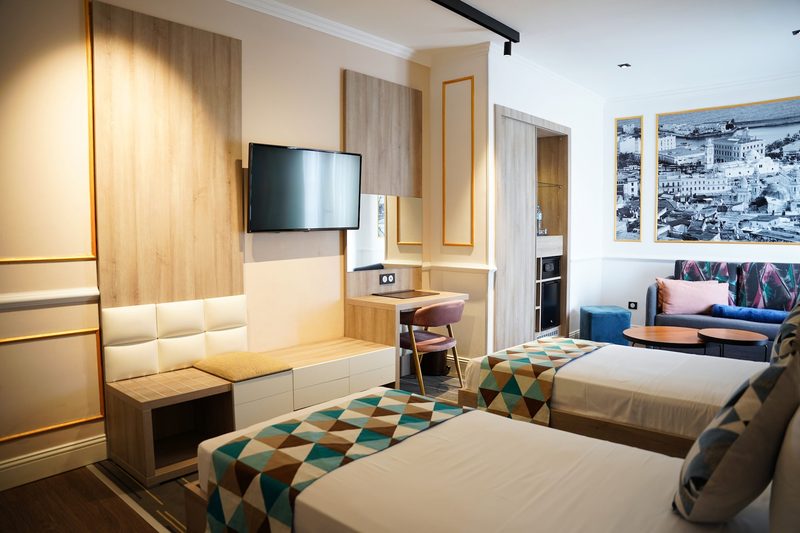
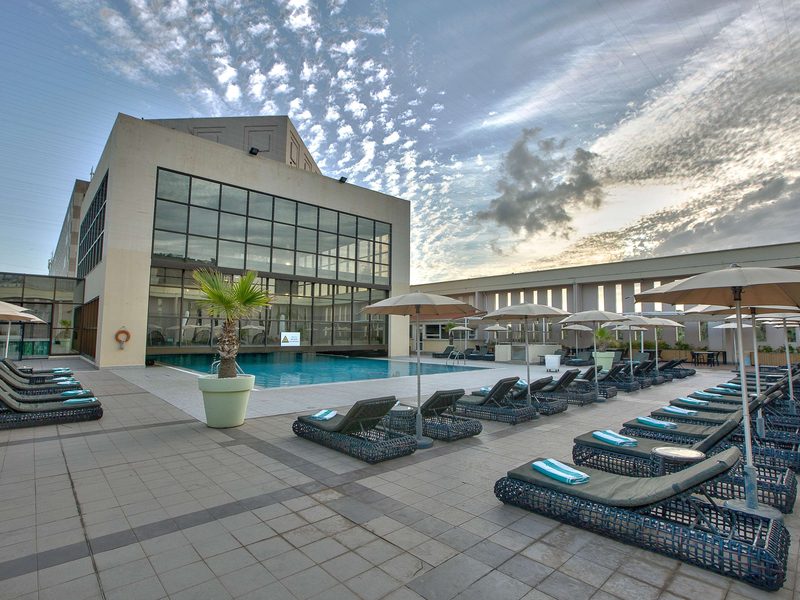
Hand-picked hotels across price tiers for February travellers.
February Events & Festivals
What's happening during your visit
Early February through early March (exact start depends on moon sighting)
Ramadan
Ramadan 2027 starts early February. The country flips its rhythm. Streets empty by day, increase at sunset. Iftar, the fast-breaking meal, becomes Algeria's daily communal high point. Accept an invite. It sticks with you for life. After dark, Algiers' Corniche swells with families. Oran's Front de Mer turns into an open-air dining hall. Bakeries wake at 4 PM; by sunset the air carries bourek, honey-dripping zlabiya, and orange-blossom qalb el louz. Mosques glow, neighborhood tables feed the needy, generosity fills the air. Non-Muslims need not fast, yet eating, drinking, or smoking in public daylight hours offends. Eat in your hotel or in private. Shift your clock to Ramadan time and you unlock a layer of Algerian culture invisible the rest of the year.
Packing Checklist
Bookmark this page — your progress is saved between visits
Need the full list with shopping links?
Climate-specific gear, brand recommendations, and what to leave at home.
View Algeria Packing List →Essential Tips
Insider knowledge and common pitfalls to avoid
Insider Knowledge
The best food window sits between sunset and about 10 PM, a slot most tourists miss by hiding in hotels. In Algiers' Bab El Oued and Belcourt, neighborhood associations lay out communal iftar tables. They serve harira, bourek, dates with lben. Sit, say bismillah, eat; no invitation needed.
Algeria's domestic flights cover huge distances cheaply. Algiers to Djanet spans 1,500 km (930 miles) by road through checkpoints and empty asphalt, or two and a half hours by air. Algiers to Constantine, Oran, and Ghardaia each fly in under ninety minutes. Air Algerie runs most routes. Book online at least ten days ahead. Airport walk-up fares cost more and southern seats sell out during school breaks.
The dinar is closed currency. You cannot buy it abroad, and exchanging leftovers on departure is tricky. ATMs in Algiers and big cities take foreign cards but spit out small amounts per go. South of the Atlas they may not work at all. Bring clean euros or US dollars and exchange at official bureaux in Algiers or your hotel. The parallel rate is better but illegal, and getting caught carries real consequences.
Algerians welcome strangers with fierce warmth. Yet they guard their privacy just as fiercely. Pointing a lens without asking triggers instant tension. Women, soldiers, mosques, anyone fasting: all off-limits unless you speak first. Ask. Always ask. Landscapes are fair game. Faces demand conversation. Build the moment, then shoot.
Avoid These Mistakes
No visa on arrival. None. Algeria stamps only those who planned months ahead. Consulates move at glacial speed. Six to eight weeks is standard, incomplete forms send you back to square one. Start the paperwork two months out, minimum. Online e-visa chatter rarely matches reality. Phone the nearest consulate and confirm your nationality's rules.
February beach plans? Forget them. Algeria owns 1,600 km (994 miles) of shore, but in winter the sand is empty for a reason. Water holds at 14°C (57°F), clubs are shuttered, winds scour the coast. Come June through September for sun and salt. February is for ruins, desert, cities.
Do not eat, drink, or smoke on the street during daylight in Ramadan. Locals will not shrug it off as a tourist slip. Expect scolding, police questions, or outright anger. Retreat to your room, wait for iftar. This rule is ironclad. Ignore it and you poison every welcome.
Explore More Activities in Algeria
Didn't see anything interesting yet?
Browse Viator's full catalog of tours, day trips, food experiences, and private guides in Algeria.
See All Algeria Tours on Viator